
Digital Archaeology: Unearthing the First Versions of Today’s Internet Titans
The modern web is a polished ecosystem of seamless user experiences, algorithmic precision, and billion-dollar valuations. Yet, beneath the sleek interfaces of today’s digital giants lie the fossilized remains of their earliest iterations—clunky, experimental, and often embarrassingly primitive. These first versions are more than historical curiosities; they are time capsules of strategic missteps, visionary bets, and the raw, unfiltered ambition that defined the internet’s formative years. For product leaders, engineers, and growth strategists, dissecting these origins offers a masterclass in iterative innovation, user-centric pivots, and the relentless refinement required to dominate a market.
The Myth of the "Overnight Success"
The narrative of overnight success is a dangerous illusion in technology. Behind every "How we built a billion-dollar company in six months" headline lies a decade of false starts, near-death pivots, and design choices that would make today’s UX teams shudder. The first versions of now-ubiquitous platforms were rarely the result of flawless execution. Instead, they emerged from a crucible of constraints—limited bandwidth, rudimentary tooling, and audiences with no frame of reference for what the web could be. To understand their evolution is to grasp the non-linear path of product-market fit.
"The first version of any product is a hypothesis. The second version is an apology. The third version is where you start to get it right."
— Reid Hoffman, Co-founder of LinkedIn
Case Study 1: Amazon (1995) – The "Bookstore" That Wasn’t
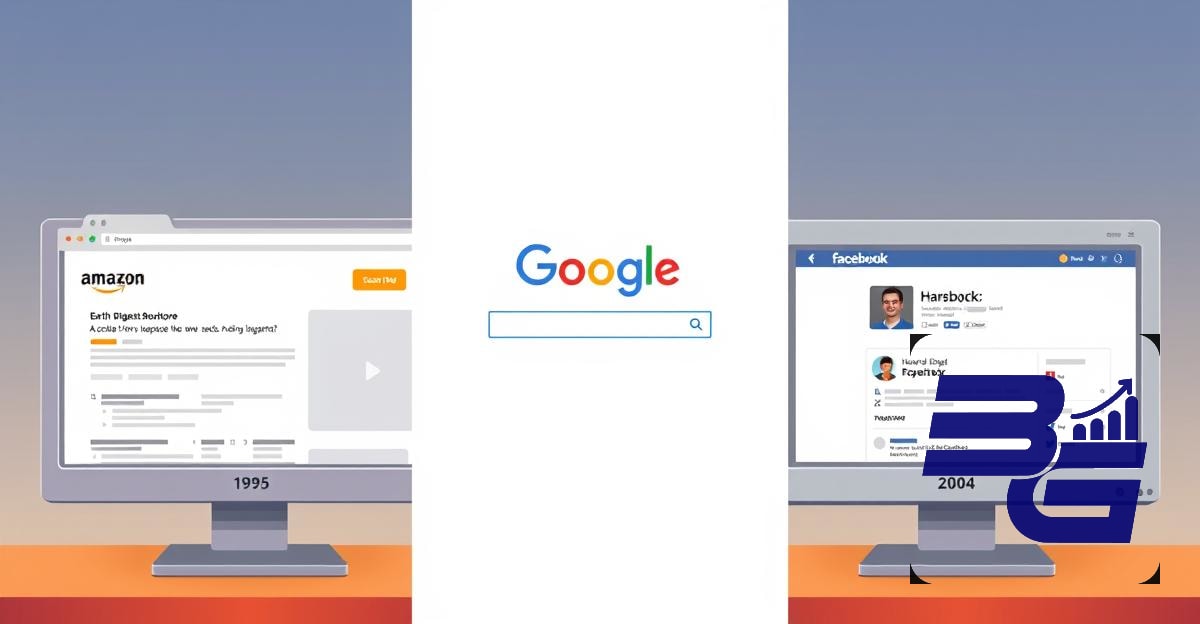
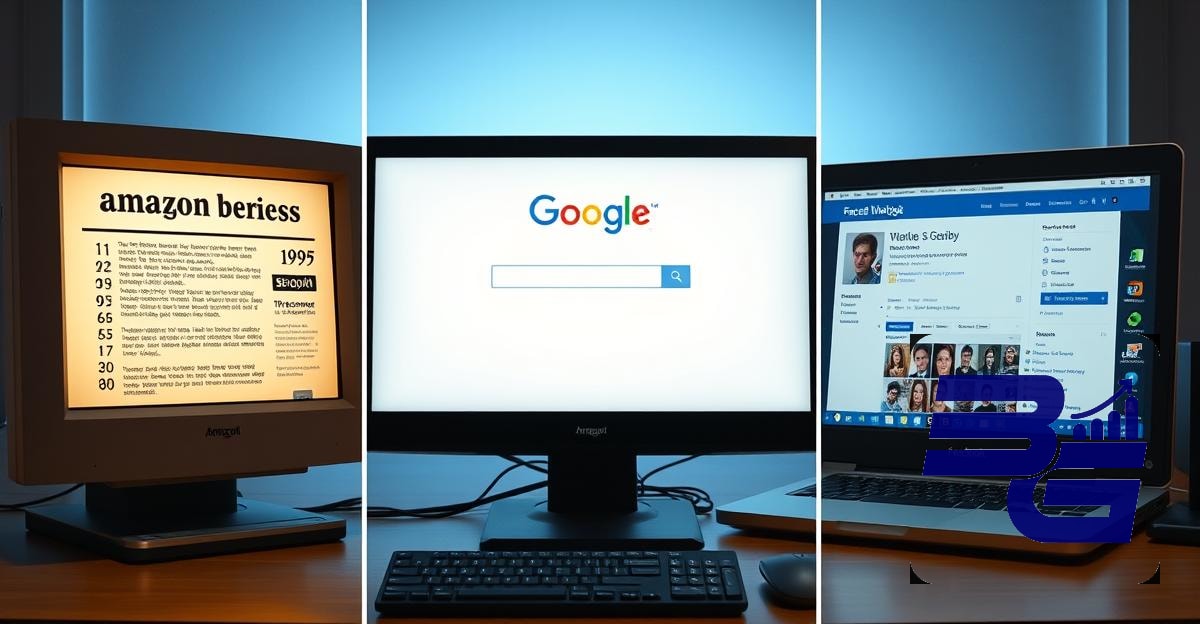
When Jeff Bezos launched Amazon in 1995, the site’s tagline was "Earth’s Biggest Bookstore." The reality was far less grandiose. The first version of Amazon.com was a bare-bones HTML page with a clunky table-based layout, a rudimentary search function, and a checkout process that required users to fax or mail their orders. The now-iconic one-click purchasing was years away; in 1995, customers had to navigate a labyrinthine form just to complete a transaction.
The Strategic Flaws (And Why They Worked Anyway)
- No Dynamic Content: Amazon’s early product pages were static HTML, manually updated by a small team. This was a scalability nightmare, but it allowed Bezos to test demand without over-investing in infrastructure.
- No Reviews or Recommendations: Today, Amazon’s recommendation engine drives 35% of its revenue. In 1995, the site had no such features—just a list of books and prices. The absence of social proof was a glaring omission, yet it forced Amazon to compete on price and selection, laying the groundwork for its logistics empire.
- No Mobile Optimization: The concept of mobile commerce didn’t exist. Amazon’s desktop-first approach was a limitation, but it also meant the company could perfect the desktop experience before expanding to new platforms.
The Pivot That Saved Amazon
Amazon’s initial success wasn’t due to its design or technology—it was due to Bezos’ obsession with customer data. By 1997, the company had introduced personalized recommendations based on purchase history, a feature that would later become the backbone of its e-commerce dominance. The lesson? Early-stage products don’t need to be perfect; they need to be measurable.
Case Study 2: Google (1998) – The Search Engine That Almost Wasn’t
Before Google became a verb, it was a Stanford research project with a name that sounded like a typo. The first version of Google.com, launched in 1998, was a minimalist page with a single search box, two buttons ("Google Search" and "I’m Feeling Lucky"), and a copyright notice. There were no ads, no images, no news feed—just 10 blue links on a white background. By today’s standards, it was laughably simple. Yet, this simplicity was its superpower.
The Algorithm That Changed Everything
Google’s breakthrough wasn’t its design—it was its PageRank algorithm, which analyzed the link structure of the web to determine relevance. While competitors like AltaVista and Yahoo cluttered their pages with portals, directories, and banner ads, Google’s uncluttered interface and superior search results created a user experience moat. The takeaway? Technical superiority trumps flashy design in the early stages.
The Monetization Gamble
For its first two years, Google had no revenue model. The company’s founders, Larry Page and Sergey Brin, were skeptical of advertising, fearing it would compromise search quality. It wasn’t until 2000 that Google introduced AdWords, a self-service platform that allowed businesses to bid on keywords. The rest is history: AdWords now generates over $200 billion annually. The lesson for product leaders? Monetization should follow traction, not precede it.
Case Study 3: Facebook (2004) – The "Hot or Not" for Harvard
Facebook’s origin story is the stuff of Silicon Valley legend: a dorm-room project turned global phenomenon. But the first version of TheFacebook.com (as it was originally called) was a far cry from today’s algorithmically curated feed. Launched in 2004, the site was a closed network for Harvard students, featuring a simple directory of profiles with photos, basic personal details, and a "Poke" button—a feature so ambiguous it became a cultural meme.
The Viral Growth Hack That Wasn’t Intentional
Facebook’s early growth wasn’t the result of a masterful growth strategy—it was a happy accident. The site’s exclusivity (limited to Harvard students) created FOMO (Fear of Missing Out), driving demand. By the time Facebook opened to other universities, it had already achieved network effects that competitors like MySpace couldn’t match. The key insight? Scarcity can be a more powerful growth lever than scale.
The Design Flaws That Shaped a Platform
- No News Feed: Facebook’s first version had no algorithmic feed. Users had to visit individual profiles to see updates. The News Feed, introduced in 2006, was met with user backlash—yet it became the core of Facebook’s engagement model.
- No Mobile App: Facebook’s mobile strategy didn’t exist until 2009. The company’s early focus on desktop allowed it to perfect the web experience before tackling mobile.
- No Ads: Like Google, Facebook’s first version had no monetization. It wasn’t until 2007 that the company introduced Facebook Ads, a move that would later fuel its IPO.
The Unifying Themes of Early-Stage Success
While Amazon, Google, and Facebook took different paths to dominance, their first versions share three critical traits that every product leader should internalize:
-
Constraints Breed Creativity:
Limited resources force teams to focus on core value propositions. Amazon’s early reliance on manual processes, Google’s minimalist design, and Facebook’s exclusivity were all responses to constraints. The lesson? Don’t wait for perfect conditions to launch.
-
Data Over Intuition:
Each of these companies obsessively measured user behavior from day one. Amazon tracked purchase patterns, Google analyzed search queries, and Facebook monitored engagement metrics. Early-stage products must be built for measurement, not just usability.
-
Pivots Are Inevitable:
None of these companies got it right on the first try. Amazon expanded beyond books, Google introduced ads, and Facebook evolved from a directory to a feed-based platform. The ability to pivot is more valuable than the perfect initial idea.
What Modern Founders Can Learn From These Relics
In an era where MVP (Minimum Viable Product) has become a buzzword, the first versions of today’s internet giants offer a sobering reminder: the bar for "viable" is lower than you think. The key is not to build a perfect product, but to build one that:
- Solves a specific problem for a specific audience. (Facebook for Harvard students, Google for researchers.)
- Is measurable in its impact. (Amazon’s sales data, Google’s search accuracy.)
- Can evolve based on real-world feedback. (Facebook’s News Feed, Google’s AdWords.)
For today’s founders, the takeaway is clear: Your first version will be embarrassing. That’s the point. The goal isn’t to impress—it’s to learn, iterate, and outlast the competition.
Conclusion: The Past Is a Blueprint for the Future
The first versions of Amazon, Google, and Facebook were not masterpieces of design or engineering. They were experiments—raw, unpolished, and full of flaws. Yet, they contained the seeds of their future dominance. For product leaders, the lesson is not to replicate these early designs, but to embrace the mindset that created them: a willingness to launch before you’re ready, to measure before you monetize, and to pivot before you stagnate.
In the words of Marc Andreessen, co-founder of Netscape and early internet pioneer:
"The only thing that matters is getting to product-market fit. Everything else is noise."
— Marc Andreessen
The first versions of today’s internet titans prove that product-market fit is not a destination, but a process. And for those willing to dig into the digital archives, the past holds the blueprint for the future.