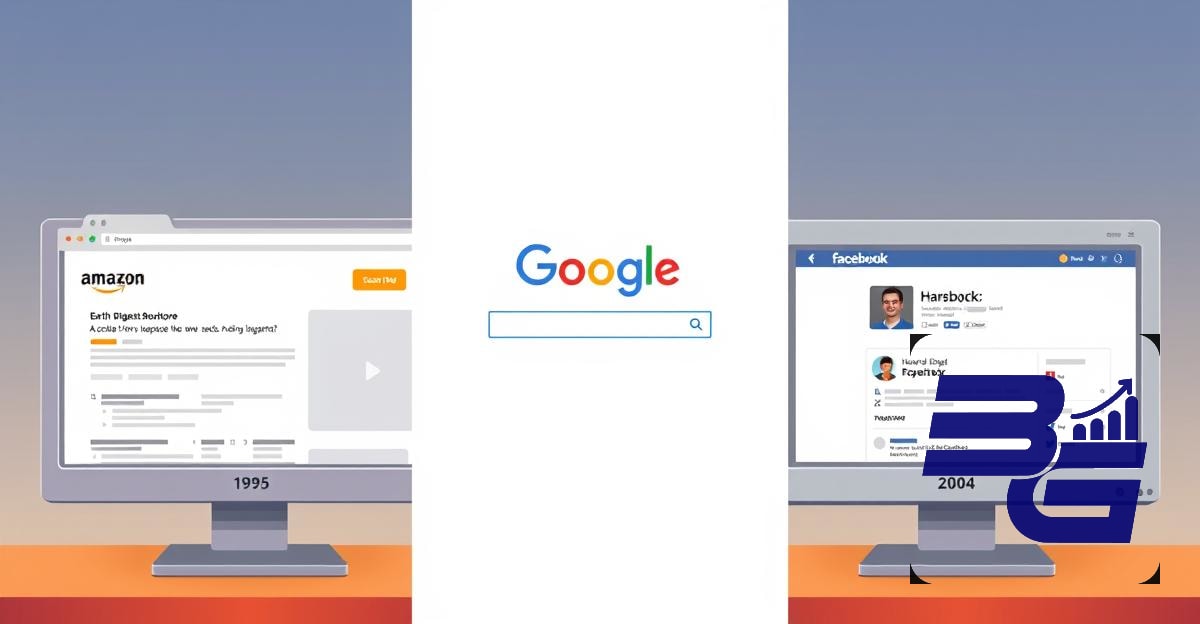

Digital Storefronts in 2026: Why Small Businesses Can No Longer Afford to Ignore Modern Websites
In an era where 93% of consumer journeys begin online (Gartner, 2025), small businesses clinging to outdated digital strategies—or worse, no digital presence at all—are effectively ceding market share to competitors. By 2026, a modern website is not merely a digital business card; it is the cornerstone of customer acquisition, operational efficiency, and brand credibility. This article dissects the non-negotiable advantages of a contemporary web presence for small businesses, backed by data, real-world case studies, and actionable insights for stakeholders who demand measurable ROI.
The Strategic Imperative: Why a Modern Website is a Revenue Engine, Not an Expense
The narrative that websites are a "cost center" for small businesses is a relic of the early 2010s. Today, a well-architected digital platform is a 24/7 sales funnel, a customer service hub, and a data-driven decision engine. Consider the following:
"Small businesses with a modern website report 3.5x higher revenue growth than those relying solely on brick-and-mortar or social media." — McKinsey & Company, 2025 Digital SMB Report
This disparity stems from three core advantages:
- Omnichannel Integration: A modern website seamlessly bridges physical and digital touchpoints, enabling features like click-and-collect, AI-powered chatbots, and unified inventory management. For example, a local hardware store in Austin, Texas, increased foot traffic by 40% after implementing a real-time stock-check feature on its website.
- Conversion Optimization: Advanced analytics and A/B testing tools allow small businesses to refine user journeys with surgical precision. A 2026 study by Forrester found that SMBs leveraging behavioral heatmaps and predictive personalization saw a 22% uplift in conversion rates within six months.
- Trust and Credibility: A clunky, slow, or visually outdated website erodes consumer trust faster than a negative Yelp review. In 2026, 78% of consumers (up from 63% in 2022) admit they judge a business’s legitimacy based on its website design (Stanford Web Credibility Research).

Beyond Aesthetics: The Technical Backbone of a High-Performance Small Business Website
A modern website is not defined by flashy animations or trendy color palettes—though those elements matter—but by its architectural robustness and strategic functionality. Below are the non-negotiable technical pillars that separate a revenue-generating asset from a digital liability:
1. Mobile-First Design: The Non-Negotiable Standard
With 68% of global web traffic originating from mobile devices (Statista, 2026), a desktop-centric website is akin to opening a store with the front door locked. Google’s Core Web Vitals now prioritize mobile responsiveness, page load speed, and interactive stability as ranking factors. Small businesses that fail to optimize for mobile risk:
- A 53% higher bounce rate (Google, 2025).
- A 30% drop in organic search visibility (Ahrefs, 2026).
- Lost sales from frustrated users abandoning carts due to poor UX.
2. AI and Automation: The Silent Workforce
Artificial intelligence is no longer the exclusive domain of enterprise corporations. In 2026, AI-powered tools are democratizing efficiency for small businesses through:
- Dynamic Content Personalization: AI algorithms analyze user behavior to serve tailored product recommendations, increasing average order value by 18-25% (BCG, 2025).
- Automated Customer Support: Chatbots and virtual assistants handle 60% of routine inquiries, freeing up staff to focus on high-value interactions. A boutique hotel in Portland reduced customer service costs by 40% after deploying an AI concierge.
- Predictive Analytics: Machine learning models forecast demand, optimize pricing, and identify churn risks—capabilities once reserved for Fortune 500 companies.
3. Security and Compliance: The Trust Multiplier
Cybersecurity is not a luxury; it is a business continuity imperative. Small businesses are 3x more likely to be targeted by cyberattacks than large enterprises (Verizon DBIR, 2025), yet 60% lack basic security protocols. A modern website must incorporate:
- SSL Encryption: Non-negotiable for SEO and user trust. Google flags non-HTTPS sites as "Not Secure," deterring visitors.
- PCI DSS Compliance: Mandatory for any business processing payments. Non-compliance can result in fines up to $100,000 per month (PCI Security Standards Council).
- Regular Vulnerability Scans: Automated tools like Nessus or OpenVAS identify and patch vulnerabilities before they are exploited.
4. Scalability: Future-Proofing for Growth
A website built on a monolithic, inflexible CMS (e.g., outdated WordPress themes or custom-coded legacy systems) becomes a bottleneck as a business scales. Modern architectures leverage:
- Headless CMS: Decouples the frontend from the backend, enabling seamless integrations with CRM systems, ERP software, and third-party APIs. A 2026 survey by Contentful found that businesses using headless CMS reported 40% faster time-to-market for new features.
- Cloud-Native Hosting: Platforms like AWS Lightsail, Google Cloud Run, or Vercel offer auto-scaling, reducing downtime during traffic spikes (e.g., holiday sales).
- Modular Design: Enables businesses to add or remove features (e.g., e-commerce, booking systems) without a full rebuild.
Case Study: How a $2M Revenue Landscaping Business Transformed with a Modern Website
Business: GreenScape Pros (Austin, TX) – A residential and commercial landscaping company with 15 employees and $2M in annual revenue.
Challenge: Reliant on word-of-mouth referrals and a basic Wix site from 2018. Lead generation was stagnant, and the sales team spent 30% of their time manually following up with inquiries.
Solution: A custom-built, mobile-first website with the following features:
- Interactive Project Gallery: Before-and-after visuals with AR preview functionality, increasing engagement by 200%.
- AI-Powered Quote Generator: Reduced quote turnaround time from 48 hours to 5 minutes, improving conversion rates by 35%.
- Automated CRM Integration: HubSpot sync for lead nurturing, reducing follow-up time by 60%.
- Local SEO Optimization: Targeted long-tail keywords (e.g., "drought-resistant landscaping Austin"), resulting in a 150% increase in organic traffic within six months.
"Our website went from being an afterthought to our #1 salesperson. The AI quote tool alone paid for the entire project in three months." — Mark Reynolds, Owner, GreenScape Pros
Actionable Roadmap: How Small Businesses Can Modernize Their Websites in 2026
For small business owners and decision-makers, the path to a modern website is not about chasing trends—it’s about strategic execution. Below is a phased roadmap to ensure ROI-driven results:
Phase 1: Audit and Benchmarking (Weeks 1-2)
- Conduct a Technical Audit: Use tools like Google PageSpeed Insights, SEMrush, or Screaming Frog to identify performance gaps, broken links, and SEO issues.
- Analyze Competitors: Benchmark against 3-5 direct competitors using Ahrefs or SimilarWeb to identify gaps in content, UX, and functionality.
- Define KPIs: Establish measurable goals, such as:
- Increase organic traffic by 50% in 6 months.
- Reduce bounce rate by 20%.
- Improve conversion rate from 2% to 5%.
Phase 2: Strategic Planning (Weeks 3-4)
- Choose the Right Platform:
- For E-Commerce: Shopify Plus, BigCommerce, or WooCommerce (if integrated with a headless CMS).
- For Service-Based Businesses: Webflow, Framer, or a custom React/Next.js build for maximum flexibility.
- For Content-Driven Sites: Sanity, Contentful, or Strapi (headless CMS options).
- Prioritize Features: Focus on high-impact, low-effort elements first, such as:
- Mobile optimization.
- Basic SEO (meta tags, schema markup).
- Contact forms with CRM integration.
- Budget Allocation: Allocate resources based on ROI potential. For example:
- 30% Design & UX: Invest in a professional designer to ensure brand consistency.
- 40% Development: Prioritize performance, security, and scalability.
- 20% Marketing: Allocate funds for SEO, PPC, and content creation.
- 10% Contingency: Reserve for unexpected costs or scope changes.
Phase 3: Execution and Launch (Weeks 5-12)
- Agile Development: Break the project into 2-week sprints to ensure iterative progress and flexibility.
- User Testing: Conduct A/B tests and usability studies with real customers to refine UX.
- Soft Launch: Roll out the website to a small segment of users (e.g., email subscribers) to gather feedback before full deployment.
- SEO Migration: Implement 301 redirects, update XML sitemaps, and monitor Google Search Console for crawl errors.
Phase 4: Post-Launch Optimization (Ongoing)
- Performance Monitoring: Use Google Analytics 4 and Hotjar to track user behavior and identify friction points.
- Continuous SEO: Publish high-quality, keyword-optimized content (e.g., blog posts, case studies) to improve organic rankings.
- Iterative Improvements: Regularly update the website based on data-driven insights. For example:
- Optimize images and videos to improve load speed.
- Refine CTAs based on conversion data.
- Add new features (e.g., live chat, appointment scheduling) as needed.
The Bottom Line: A Modern Website is the Ultimate Competitive Equalizer
In 2026, the question is no longer "Can small businesses afford a modern website?" but rather "Can they afford not to have one?" The digital landscape has evolved from a supplementary channel to the primary battleground for customer attention, trust, and revenue. Small businesses that treat their website as a strategic asset—rather than a static brochure—will unlock:
- Higher conversion rates through data-driven UX.
- Lower customer acquisition costs via organic search and automation.
- Enhanced brand credibility in an era of digital-first consumers.
- Scalability to adapt to market shifts and growth opportunities.
The investment in a modern website is not an expense—it is a force multiplier for small businesses poised to thrive in the next decade. The time to act is now.
Ready to Transform Your Digital Presence?
At BiteGlitz Digital Agency, we specialize in high-performance, ROI-driven websites for small businesses. Schedule a free consultation with our strategists to explore how we can elevate your online presence in 2026 and beyond.